Should You Buy the Keychron Q16 He 8K in 2026? A Deep Dive
If you had told me a year ago that I would spend months using a glossy ceramic keyboard with Hall-effect switches and an 8,000Hz polling rate, I probably would have assumed it was more of a collector’s piece than something I’d actually want on my desk every day. After living with the Keychron Q16 He 8K for several months, I can say it’s much more interesting than that. It’s one of the strangest premium keyboards I’ve used in a long time, and I mean that in both a good and bad way.
The short version is this: I think the Keychron Q16 He 8K is worth considering in 2026, but only for a specific kind of buyer. If you want a keyboard that feels unique, looks unlike the sea of aluminum and plastic boards on the market, and offers genuinely fast magnetic-switch gaming performance, this board absolutely stands out. But if you want something low-maintenance, wireless, universally hot-swappable, or especially practical for mixed work-and-travel use, I think there are some real trade-offs you need to understand before buying it.
I’ve been using this keyboard for work, gaming, late-night writing sessions, and casual browsing, and what I found was that the Q16 He 8K is not just “another premium mechanical keyboard.” It has a very specific personality. Some of its strengths impressed me immediately. Some of its weaknesses only became obvious after the honeymoon period wore off.
My First Impressions After Unboxing
The first thing I noticed was the finish. The ceramic shell and ceramic keycaps make the Q16 He 8K feel different from almost every other keyboard I’ve used. It has this cool, smooth, almost glassy touch that immediately feels premium, but not in the conventional CNC-aluminum way. It looks clean, dense, and a little futuristic. I was surprised by how much the material changes the whole experience, even before you type a single word.
The second thing I noticed was the weight. Even for a compact board, it feels dense and substantial on the desk. Once I placed it in my usual setup, it didn’t slide around, and that helped it feel planted during gaming sessions. At the same time, I quickly realized this is not a keyboard I’d want to move around constantly. It’s a desk keyboard, not a lifestyle keyboard.
The 65% layout also worked better for me than I expected. I usually miss dedicated function keys for a few days whenever I switch to a smaller board, but I adjusted fairly quickly here. The inclusion of arrow keys matters a lot, especially for editing documents and navigating spreadsheets. In my experience, 65% is still one of the most practical compact layouts if you want to save desk space without feeling cramped.
What the Q16 He 8K Actually Is
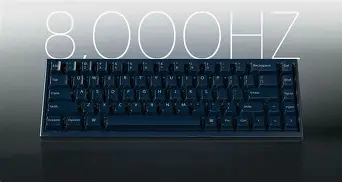
The Keychron Q16 He 8K is a 65% wired magnetic-switch keyboard with an 8,000Hz polling rate, adjustable actuation, rapid trigger support, and a ceramic case-and-keycap design that makes it visually and physically unusual. It supports advanced key customization through Keychron’s web-based launcher, and depending on your workflow, that flexibility can be a major selling point.
On paper, this sounds like a keyboard designed primarily for competitive gaming. After testing it for months, I think that’s only partly true. Yes, the magnetic switch features are here for gamers, and yes, they matter. But I also found that the board’s bigger identity is really about novelty and feel. The ceramic build is the part you notice every single day. The 8K polling rate is impressive, but the material and acoustics are what give this keyboard its character.
Typing Experience: Beautiful, Fast, and Occasionally Annoying
Let’s start with the thing that mattered most to me: typing.
For the first week, I genuinely enjoyed typing on the Q16 He 8K. The key feel was smooth, the response was immediate, and the sound had a sharper, more distinct tone than many gasket-mounted aluminum boards I’ve used. There’s a crispness here that stands out. I noticed that the board sounds less muted and more lively than a lot of premium boards that chase an ultra-soft, marbly sound profile.
That said, the ceramic keycaps are not going to be for everyone. One thing that bothered me was how slippery they could feel during longer sessions. Not constantly, and not enough to make the keyboard unusable, but enough that I noticed it. On a normal PBT keycap set, I tend to settle into a rhythm and forget about the surface entirely. Here, I remained more aware of it. The smoothness is part of the appeal, but it can also work against comfort if you type for hours at a time.
I also found that the board can feel a little less forgiving than softer, more cushioned keyboards. If you love a plush typing experience, this may not be your ideal endgame board. It feels more precise than cozy. I appreciated that for short bursts and focused writing, but during longer workdays, I sometimes missed the warmth and ease of a more traditional premium mechanical setup.
Still, the responsiveness is excellent. Even outside gaming, the adjustable actuation made the keyboard feel snappy and modern. I experimented with lighter and deeper actuation settings over time, and I ended up keeping my main typing keys at a more moderate setting while making some gaming keys more aggressive. That level of tuning is not necessary for everyone, but I found it genuinely useful once I spent time with it.
Gaming Performance: This Part Absolutely Delivers
If gaming matters to you, the Q16 He 8K makes a strong case for itself in 2026.
The magnetic switches, rapid trigger behavior, and very high polling rate make the board feel extremely immediate. In fast shooters and movement-heavy games, I noticed the keyboard felt more reactive than my standard mechanical boards. I’m careful not to exaggerate differences like this, because not every feature marketed to gamers produces a meaningful real-world improvement. In this case, though, I do think the low-latency behavior and adjustable actuation are real advantages.
Looking for the best Laptops & Computers deals on Amazon?
Shop Amazon →What I liked most was not the 8K number itself, but the control. Being able to fine-tune actuation and use rapid trigger made movement inputs feel cleaner and more responsive. If you’re the type of player who already tweaks mouse DPI, monitor refresh settings, and in-game sensitivity, this keyboard fits that mindset very well.
At the same time, I think some people will overvalue the spec sheet. If you mainly play slower single-player games, strategy titles, or casual multiplayer sessions, the Q16 He 8K will still feel great, but you may not fully benefit from the advanced magnetic features. In other words, the keyboard is gaming-capable enough to justify its positioning, but not everyone needs this level of performance.
Build Quality and Design: Premium, but High-Maintenance
This is the part of the keyboard that kept me conflicted.
On one hand, I really do appreciate how different it looks and feels. Most premium keyboards are trying to win you over with aluminum machining, foam layers, and interchangeable switches. The Q16 He 8K goes in a completely different direction. The ceramic construction gives it a cool touch and an upscale look that feels more decorative than industrial. On a clean desk, it stands out immediately.
On the other hand, I quickly learned that a glossy, smooth ceramic board is not exactly carefree. Fingerprints show up more than I’d like. Dust is noticeable. Smudges are noticeable. I found myself wiping it down more often than any other keyboard I currently own. If you’re the kind of person who likes a setup to look pristine, you’ll either love maintaining it or hate the constant visual reminders that you touched your own keyboard.
I was also surprised by how much the ceramic identity overshadowed everything else. That sounds obvious, but what I mean is this: the Q16 He 8K is a board you choose because you want this exact material experience. If you are lukewarm about the ceramic idea, the rest of the keyboard may not be enough on its own to justify the price.
Software and Customization
I had a mostly positive experience with the customization tools. The Keychron launcher was straightforward enough for adjusting key functions, lighting, and actuation settings without feeling intimidating. I didn’t need to fight with bloated software, and that alone earns points from me.
The magnetic switch customization is where the board becomes more than a style piece. I spent time dialing in different trigger points and quickly found that a one-size-fits-all setup wasn’t ideal. For work, I preferred settings that reduced accidental presses. For gaming, I went lighter and faster. That flexibility is one of the Q16 He 8K’s strongest practical advantages.
The limitation, though, is that this is not the most open-ended keyboard ecosystem. If you’re the type who loves broad switch experimentation, this board is less freeing than a standard hot-swappable MX-style board. That doesn’t make it bad, but it does make it more specialized.
Daily Use: Where I Ended Up After the Honeymoon Period
After the first couple of weeks, my opinion got more nuanced.
I still liked using it. I still admired it on my desk. I still enjoyed gaming on it. But I also stopped thinking of it as a universal recommendation. In my experience, the Q16 He 8K is best when I’m sitting down for focused use at a permanent desk setup. It feels less ideal when I think about flexibility, portability, or long-term fuss-free ownership.
What I appreciated most over time was the sense that this keyboard actually feels distinct. In a crowded market, that matters. I’ve used plenty of keyboards that were competent but forgettable. The Q16 He 8K is not forgettable. Even the things I disliked about it were specific enough to make it memorable.
What disappointed me most was how often I noticed the maintenance aspect. I don’t mind caring for nice gear, but I do mind when upkeep becomes part of the product identity. This board comes very close to that line.
Pros and Cons
Pros
- Unique ceramic build that looks and feels unlike typical plastic or aluminum keyboards
- Excellent gaming performance with magnetic switches, rapid trigger, and 8,000Hz polling
- Adjustable actuation that genuinely improves customization for both typing and gaming
- Compact 65% layout saves desk space while keeping arrow keys
- Strong desk presence with a premium, collector-style design
- Responsive software tools for remapping, lighting, and switch tuning
Cons
- Wired only, which feels limiting in 2026 at this price level
- High-maintenance finish that shows fingerprints and smudges easily
- Ceramic keycaps can feel slippery during extended typing sessions
- Less universally flexible than standard hot-swappable mechanical keyboards
- Premium pricing makes it hard to recommend casually
- Not ideal for travel or frequent desk changes due to weight and material choice
Comparison Table
| Feature | Keychron Q16 He 8K | Typical Premium Aluminum 65% Keyboard | Typical Gaming Hall-Effect Keyboard |
|---|---|---|---|
| Primary Material | Ceramic case and ceramic keycaps | Aluminum case, usually PBT keycaps | Plastic or aluminum mix |
| Switch Type | Magnetic Hall-effect | Mechanical MX-style | Magnetic Hall-effect |
| Polling Rate | Up to 8,000Hz | Usually 1,000Hz | Often 1,000Hz to 8,000Hz |
| Typing Feel | Fast, crisp, smooth, slightly hard-edged | Varies, often warmer and softer | Fast, sometimes less refined acoustically |
| Maintenance | High | Low to moderate | Low to moderate |
| Wireless Option | No | Sometimes | Sometimes |
| Best For | Enthusiasts who want standout design and fast gaming performance | General enthusiasts and daily typists | Competitive gamers first |
Who I Think Should Buy the Keychron Q16 He 8K in 2026
After using it for months, I think this keyboard makes the most sense for three kinds of people.
First, keyboard enthusiasts who are bored with conventional builds. If you’ve already owned nice aluminum boards and want something that feels genuinely different, the Q16 He 8K delivers that in a way most products don’t.
Find top-rated Laptops & Computers products at great prices.
See Deals →Second, gamers who also care about materials and aesthetics. A lot of high-performance gaming keyboards feel visually generic. This one doesn’t. If you want speed without giving up a premium desk presence, this is one of the more interesting options available.
Third, buyers who use one main desk setup and don’t need wireless freedom. This keyboard feels best when it can stay put and be appreciated as part of a permanent setup.
Who Should Skip It
I would skip the Q16 He 8K if you want a keyboard that disappears into your routine. This is not that kind of product.
If you value wireless connectivity, broad switch compatibility, textured keycaps, or low-maintenance ownership, I think you’ll probably be happier elsewhere. I’d also hesitate to recommend it to someone who types for eight to ten hours a day and prioritizes comfort above all else. The typing experience is good, but for me it was not the most relaxed or forgiving long-session board.
Buying Guide: What to Consider Before You Buy
1. Decide Whether You Want the Material or the Features
This is the biggest question. If you’re buying it mainly for magnetic-switch gaming features, you should compare it against other Hall-effect boards in the same general price range. If you’re buying it because the ceramic design is what excites you, that’s a stronger reason, because that’s the part that truly makes it different.
2. Be Honest About Your Desk Habits
I noticed that this keyboard rewards tidy setups and punishes neglect. If you don’t want to wipe down your keyboard regularly, the polished ceramic look may become more irritating than luxurious.
3. Think About Your Use Split
If you game a lot and also want a conversation-piece keyboard, the Q16 He 8K is easy to understand. If your use is mostly office work, emails, and documents, the advanced gaming features may end up feeling underused.
4. Consider Layout Tolerance
I adapted well to the 65% form factor, but not everyone does. If you rely heavily on a function row, dedicated navigation keys, or a numpad, this keyboard may ask too much compromise from you no matter how nice it looks.
5. Remember That Wired-Only Is a Real Limitation
In 2026, a premium desk keyboard can absolutely still be wired, especially if it’s performance-focused. But I think you should go into this knowing that you are paying for a specialized experience, not an all-around convenience champion.
Final Verdict
So, should you buy the Keychron Q16 He 8K in 2026? My answer is yes, but only if you specifically want what makes it unusual.
After testing for several months, I came away impressed by its speed, customization, and unmistakable design. I appreciated the responsiveness, the compact layout, and the fact that it doesn’t feel like a copy of every other premium keyboard on the market. I also think the ceramic construction gives it a real identity, not just a gimmick.
At the same time, I can’t ignore the drawbacks. The wired-only design feels restrictive, the finish demands more care than I’d like, and the keycap feel won’t suit everyone. In my experience, this is a keyboard that rewards intentional buyers and disappoints impulsive ones.
If you want a distinctive, premium magnetic keyboard that feels special every time you sit down at your desk, I think the Q16 He 8K is one of the more memorable options you can buy in 2026. If you want the safest, easiest, most practical premium keyboard for everyday life, I’d keep looking.