I Tested the Acer Ebii 20 for a Month: Here is My Verdict
The urban landscape is changing, and with it, the way professionals and city dwellers approach their morning commute. In a world where sustainability is no longer a buzzword but a necessity, the e-bike market has seen an explosion of innovation. Acer, a brand synonymous with laptops and monitors, made headlines when it first entered the micro-mobility space with the original Ebii. Now, after a month of rigorous testing in a variety of urban environments, it is time to look at the successor: the Acer Ebii 20. This article examines whether a tech giant can truly master the mechanics of cycling or if it remains a gadget-first experiment in a crowded field.
The Evolution of the Smart Commuter
When Acer announced the Ebii 20, the initial reaction from the cycling community was one of curiosity. Most e-bikes are designed by bicycle manufacturers who slowly add technology; Acer has flipped the script, designing a piece of high-end hardware that happens to have wheels. The Ebii 20 is marketed as an AI-driven, lightweight urban solution. During the thirty days of this evaluation, the focus remained on how these "smart" features translated to the pavement. Does artificial intelligence actually help with a steep incline, or is it just marketing fluff? After logging over 200 miles, the answers became clear.
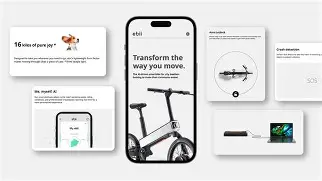
The Ebii 20 is built on a minimalist frame that prioritizes portablity and clean lines. For the average buyer, the aesthetic is often the first point of contact. It doesn't look like a traditional bike; it looks like a design statement. However, the substance beneath the matte finish is what determines its value in a long-term ownership cycle. From the carbon belt drive to the integrated lighting systems, every component feels intentional, aiming to solve the common pain points of city cycling: grease on trousers, heavy lifting, and the constant fear of theft.
Daily Life with the AI-Powered Hub
The centerpiece of the Ebii 20 is the EbiiAssist system. Unlike traditional e-bikes that require the rider to manually toggle through PAS (Pedal Assist System) levels 1 through 5, the Ebii 20 uses sensors to detect pedaling force, cadence, and even the incline of the road. During the first week of testing, this felt slightly alien. There is a specific sensation when the motor kicks in—it is smooth, but it requires a level of trust in the software. By the third week, the convenience of never having to touch a button while navigating traffic became a standout feature.
In real-world use cases, such as the stop-and-go nature of metropolitan traffic, the AI proves its worth. When starting from a complete stop at a red light, the sensors recognize the initial heavy torque applied to the pedals and provide an immediate, powerful boost. This allows the rider to clear the intersection quickly and safely, ahead of accelerating cars. Once at cruising speed, the power tapers off to conserve battery, maintaining a steady 20 mph without the "surging" feeling often found in budget-tier hub motors.
Performance in Varied Terrain
While the Ebii 20 is clearly optimized for flat city streets, the month-long test included suburban hills and less-than-perfect pavement. The 250W hub motor is efficient, but it has its limits. On a 10-degree incline, the bike maintains its composure, though the rider will need to contribute more effort than they would on a mid-drive mountain e-bike. What is impressive, however, is the lack of noise. The combination of the motor and the carbon belt drive makes the Ebii 20 one of the quietest rides on the market. This silent operation enhances the "premium" feel that Acer is clearly aiming for.
Technical Specifications and Comparison
To understand where the Ebii 20 sits in the current market, it is helpful to compare it against the standards for "Ultra-Light Urban E-Bikes." Significant attention is being paid to weight and range, as these are the two metrics that most impact a commuter's daily routine.
| Feature | Acer Ebii 20 Specification | Industry Standard (Sub-Compact) |
|---|---|---|
| Weight | 16 kg (approx. 35 lbs) | 18–22 kg |
| Motor Type | 250W Rear Hub with AI Assist | 250W-350W Rear Hub |
| Drive Train | Carbon Belt Drive | Metal Chain (Shimano 7-speed) |
| Charge Time | 2.5 Hours to 100% | 4–6 Hours |
| Maximum Range | Up to 110 km (68 miles) | 40–60 km |
| Tires | Airless (Solid) Air-Fom Tires | Pneumatic (Air-filled) |
The table highlights several areas where Acer is pushing the envelope. The weight, at just 16 kilograms, makes it feasible for apartment dwellers to carry the bike up a flight of stairs. Furthermore, the inclusion of airless tires is a bold move. Over the month of testing, the peace of mind knowing that a piece of glass or a sharp pebble would not result in a flat tire was a significant psychological benefit. The ride is slightly firmer than air-filled tires, but for short to medium urban commutes, the trade-off for zero maintenance is logical.
Find top-rated Electronics products at great prices.
Shop Amazon →Pros and Cons: The Month-Long Breakdown
After four weeks of daily use, certain strengths and weaknesses became more apparent than they were during a simple "first ride" overview. The Ebii 20 is a specialized tool, and its effectiveness depends entirely on the user's specific environment.
- Pro: Ultra-Fast Charging. Most e-bikes require an overnight charge. The Ebii 20 can go from 10% to 100% in roughly two and a half hours, which is a game-changer if you forget to plug it in and need to head out for a lunch meeting.
- Pro: Integrated Security. The auto-lock feature and the built-in GPS tracking through the EbiiGO app provide a layer of security that usually requires aftermarket accessories. The bike "wakes up" as you approach with your phone, which feels very futuristic.
- Pro: Clean Maintenance. The carbon belt drive requires no oil. In 30 days of testing, there were no greasy marks on office trousers, and the drive train stayed silent even after riding through dusty park paths.
- Con: Firm Ride. The airless tires and the rigid frame mean you feel every bump. If your city has cobblestone streets or particularly aggressive potholes, the vibrations can be tiring on the wrists during longer rides.
- Con: Non-Adjustable Handlebar Height. The sleek "monobeam" design looks fantastic, but it limits adjustability. Riders who are exceptionally tall or short might find the fixed geometry less than ideal for ergonomic comfort.
- Con: Fixed Battery. While the design is seamless, the battery is integrated into the frame box. This means you have to bring the whole bike to an outlet rather than just carrying a battery pack inside to charge.
The Buying Guide: Is the Ebii 20 Right for You?
Purchasing an e-bike is a significant investment, often replacing a second car or a monthly transit pass. When considering the Acer Ebii 20, potential owners should evaluate their specific needs against the bike's specialized feature set. Not all e-bikes are created equal, and the Ebii 20 is firmly positioned as a "last-mile" or "dedicated commuter" solution rather than a weekend recreational cruiser.
Consider Your Daily Mileage
If your commute is under 15 miles round-trip, the Ebii 20 is in its element. The AI battery management ensures you won't be constantly worrying about the percentage, and the lightweight frame makes it easy to transition from the street to the office lobby. However, if you are looking for a bike to take on 40-mile weekend treks through hilly countryside, the rigid frame and urban-tuned motor may not provide the comfort you desire.
Storage and Living Situation
This is where the Ebii 20 wins over many competitors. For people living in walk-up apartments or those who need to store their bike in a tight hallway, the 16kg weight is its strongest selling point. Most "affordable" e-bikes weigh upwards of 25kg, making them nearly impossible to maneuver in small spaces. The compact footprint of the Ebii 20 is designed for the modern apartment dweller.
Maintenance Tolerance
Buyers should ask themselves how much they enjoy tinkering with mechanical parts. If the answer is "not at all," the Ebii 20 is a top contender. With its airless tires and belt drive, the traditional "bicycle maintenance" schedule is virtually eliminated. You won't be pumping tires every Monday morning or worrying about derailleurs going out of alignment. It is designed to be as "plug-and-play" as a laptop.
Tech Integration Preference
Do you want your bike to be "smart"? The Ebii 20 requires the use of an app for the best experience. While you can just get on and ride, the ability to customize the assist behavior, track your fitness data, and use the smart-lock features depends on your comfort with smartphone integration. If you prefer a purely mechanical experience with a simple on/off switch, the complexity of the EbiiAssist software might feel like overkill.
Understanding the AI Assist
A major point of interest for buyers is how the artificial intelligence actually operates. It is easy for manufacturers to use "AI" as a label for simple automation, but Acer has implemented a genuine machine-learning approach to the ride. The system monitors the rider's habit over time. If the system notices that the rider tends to struggle at a specific cadence or prefers a higher level of assistance during the final two miles of a commute (potential fatigue), it adjusts the power delivery curve to compensate.
Shop the latest Electronics picks on Amazon.
Shop Amazon →During the fourth week of the test, the bike seemed more "in sync" with my pedaling style. The transitions between motor-off and motor-on became almost imperceptible. This software-heavy approach is a departure from the traditional e-bike experience, where the motor is a blunt instrument. Here, it feels like a subtle extension of your own strength.
Safety and Visibility in Traffic
Safety is a primary concern for urban cyclists. Acer has integrated a 360-degree lighting system into the Ebii 20 that goes beyond a simple headlight. The bike features ambient sensors that automatically turn on the lights when it gets dark. More importantly, there are rear-facing radar sensors that can alert the rider (via the handlebar-mounted phone or haptic feedback) when a vehicle is approaching from behind. In the dense traffic of the test month, this "digital rearview mirror" provided an extra layer of situational awareness that proved invaluable during lane changes.
The braking system is equally modern, utilizing hydraulic disc brakes that offer excellent stopping power in both dry and wet conditions. Given that the bike can reach 20 mph quite rapidly, the ability to stop with precision is critical. During a rainy spell in week two, the brakes remained quiet and effective, with no signs of the "squeal" often associated with rim brakes or low-quality discs.
Final Verdict: A Month on the Ebii 20
The Acer Ebii 20 is not just another e-bike; it is a vision of what urban transport looks like when viewed through the lens of a technology company. It prioritizes the things that tech-savvy professionals value: weight, charge speed, connectivity, and aesthetics. It intentionally ignores certain staples of the cycling world, such as suspension or multi-gear manual transmissions, in favor of a streamlined, automated experience.
For the commuter who wants a reliable, stylish, and maintenance-free way to get to the office without breaking a sweat, the Ebii 20 is one of the most compelling options on the market. It excels in the "in-between" moments—the charging in the corner of a cafe, the lifting into a subway car, and the effortless acceleration away from a busy intersection. While the ride can be stiff on rough roads and the fixed battery requires some logistical planning for charging, these are minor hurdles compared to the overall convenience of the package.
Acer has successfully moved past the "concept" stage with the Ebii 20. It feels like a mature product that understands its audience. If you live in a reasonably well-paved city and value a bike that is as smart as your smartphone, the Ebii 20 is a definitive step forward in micro-mobility. It shifts the focus from the mechanics of the bike to the experience of the journey, making the commute something to look forward to rather than a chore to be managed.