Head-to-Head: Motorola Edge 70 vs Nothing Phone 3 (Detailed Comparison)
Choosing between the Motorola Edge 70 and the Nothing Phone 3 comes down to a familiar modern smartphone dilemma: should a buyer prioritize flagship-style power, camera flexibility, and long software support, or aim for a lighter, more affordable phone that still covers the essentials extremely well? These two devices sit in noticeably different price brackets, but they still overlap enough in screen size, styling ambition, and premium features that comparisons are inevitable.
On paper, the Nothing Phone 3 looks like the more advanced device. It brings a faster class of chipset, a more versatile camera system, longer update support, and the distinctive design language that has become Nothing’s signature. The Motorola Edge 70, however, takes a different route. It focuses on being slim, light, durable, and comparatively accessible, while still offering a high-quality OLED display, fast charging, and a capable main camera setup.
For buyers, the real question is not simply which phone has the stronger specifications. It is which model fits actual daily use better. Some people care most about gaming smoothness, low-light photography, and keeping a phone for five or six years. Others care more about comfort in the hand, dependable battery life, practical durability, and value for money. This comparison looks at both phones through that real-world lens.
Quick Overview
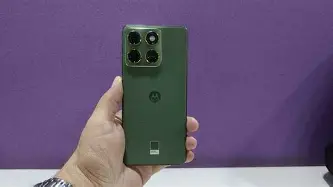
The Motorola Edge 70 is best understood as a premium-leaning upper mid-range phone. It aims to deliver a refined experience without pushing into full flagship pricing. Its strengths include a very light body, strong ingress protection, a high-quality display, and a user-friendly software experience.
The Nothing Phone 3, by contrast, is positioned much closer to the flagship tier. It adds more processing power, more ambitious camera hardware, stronger storage standards, a larger battery, and significantly longer software support. It also leans heavily into design identity, with the company’s recognizable rear lighting interface and minimalist software style.
That means this is not purely a specs battle. It is also a question of priorities: value and practicality versus performance and polish.
Comparison Table
| Feature | Motorola Edge 70 | Nothing Phone 3 |
|---|---|---|
| Positioning | Upper mid-range | Near-flagship / flagship-lite |
| Display | 6.7-inch P-OLED, 120Hz | 6.7-inch OLED, 120Hz |
| Resolution | 1220 x 2712 | 1260 x 2800 |
| Chipset Class | Snapdragon 7-series tier | Snapdragon 8s-series tier |
| RAM / Storage | 8GB/12GB, 256GB | 12GB/16GB, 256GB/512GB |
| Rear Cameras | 50MP main + 50MP ultra-wide | 50MP main + 50MP telephoto + 50MP ultra-wide |
| Front Camera | 50MP | 50MP |
| Battery | Approx. 4800-5000mAh | 5150mAh |
| Wired Charging | 68W | 65W |
| Wireless Charging | 15W | 15W |
| Reverse Wireless | No | Yes |
| Build Highlights | Very slim and light, strong durability focus | Glass-and-metal design with signature rear lighting |
| Water/Dust Rating | IP69-class protection | IP68-class protection |
| Software Support | Shorter support window | Longer OS and security support |
| Best For | Value, comfort, everyday reliability | Power users, camera users, long-term ownership |
Design and Build Quality
The first major difference appears before either phone is turned on. The Motorola Edge 70 is built around comfort. It is notably slim and light, which makes it easy to carry, easier to use one-handed for quick tasks, and less tiring during long browsing or reading sessions. For buyers who dislike heavy phones that constantly remind them they are in a pocket or bag, that matters more than spec sheets often suggest.
Motorola also appears to emphasize toughness here. Strong water and dust resistance, paired with durability-focused design choices, gives the Edge 70 a practical appeal. This is the kind of phone that should suit commuters, travelers, and anyone who regularly uses a phone outdoors or in unpredictable weather.
The Nothing Phone 3 takes the more visually dramatic route. It is heavier and thicker, but that comes with a more overtly premium, statement-making design. Nothing’s hardware language is meant to stand out, and for many buyers that is a legitimate selling point. The rear lighting interface is not just aesthetic branding; it also creates a distinctive notification system that appeals to users who want something different from the usual glass slab.
In daily use, though, the trade-off is simple: the Nothing Phone 3 likely feels more substantial and more premium, while the Edge 70 is easier to live with physically. Neither approach is wrong. It depends on whether the buyer values comfort or character more.
Display Quality
Both phones use 6.7-inch, high-refresh-rate OLED panels, so neither is lacking in this area. For streaming, scrolling social media, reading articles, or playing games, both should feel smooth and modern. Each also offers strong brightness figures on paper, which is important for outdoor visibility.
The Nothing Phone 3 has the slight edge in raw display sharpness, and it may appeal more to buyers who obsess over fine details, cleaner text rendering, and flagship-style panel quality. For watching high-resolution video or editing photos on-device, that extra sharpness is a nice bonus.
The Motorola Edge 70, however, should not be underestimated. Motorola has been increasingly strong at delivering vibrant OLED panels, and for everyday users the difference may be subtle. If the phone also carries color-tuning advantages for accuracy, that can be useful for buyers who care about natural-looking images rather than oversaturated output.
In practice, both displays are likely to satisfy most people. The deciding factor is not that one is good and the other is poor. It is that the Nothing Phone 3 aims closer to flagship expectations, while the Edge 70 tries to deliver a premium display at a more approachable price.
Looking for the best Mobile Phones deals on Amazon?
View Offers →Performance and Everyday Speed
This is one of the clearest areas where the Nothing Phone 3 pulls ahead. Its chipset class is better suited to demanding users: mobile gamers, heavy multitaskers, people who edit video clips on their phones, and buyers who want their device to feel fast for years rather than just months. Faster graphics performance, stronger sustained speed, and better top-end responsiveness all matter in those scenarios.
That advantage extends beyond benchmarks. It affects how quickly large games load, how easily the phone handles many background apps, and how well it copes with future software demands. Buyers who keep phones for three to five years should pay close attention here, because stronger internal hardware tends to age more gracefully.
The Motorola Edge 70 is more about balance than brute force. For messaging, web browsing, video streaming, maps, photography, and casual gaming, it should be perfectly capable. Most mainstream users are not continuously pushing their phones to the limit, and for them, a well-optimized mid-range chip can feel surprisingly close to a higher-end one in ordinary use.
Where the gap shows is in heavy gaming, camera processing speed, and long-term headroom. Someone who mostly uses a phone for calls, apps, social media, banking, email, and photos will probably find the Edge 70 sufficient. Someone who wants sustained top-tier fluidity should look harder at the Nothing Phone 3.
Software Experience and Long-Term Support
Software can matter as much as hardware, especially for anyone planning to keep a phone beyond two years. The Nothing Phone 3 appears stronger here, offering a longer support promise for both operating system updates and security patches. That has real value. It means the phone is likely to stay safer, retain newer features longer, and hold resale value better over time.
Nothing’s software approach has also built a reputation for clean visuals and a coherent identity. Buyers who appreciate a distinctive but uncluttered Android experience may find it especially appealing. It aims to feel fresh without becoming chaotic.
The Motorola Edge 70 is likely to offer a cleaner-than-average Android experience as well, and Motorola often keeps its interface relatively straightforward. That is good news for users who want simplicity and minimal bloat. But the shorter support window is harder to ignore. For buyers who upgrade frequently, that may not matter much. For those who want a phone to remain current for as long as possible, it matters a great deal.
From a long-term ownership perspective, Nothing has the software advantage.
Camera Comparison
Camera performance is often where buyers feel the difference between price tiers most directly, and this is another area where the Nothing Phone 3 appears more ambitious. Its triple-camera setup includes a dedicated telephoto lens, which immediately gives it an advantage in flexibility. For portraits, travel shots, pets, stage events, and any moment where a subject is farther away, telephoto hardware is much more useful than digital cropping alone.
The Motorola Edge 70 uses a simpler two-camera setup built around a main sensor and an ultra-wide camera. For many people, that is enough. A strong main camera can handle the majority of day-to-day photography: family photos, food, quick social posts, receipts, pets, and landscapes. The ultra-wide lens adds value for group shots, architecture, and scenery.
Still, the Nothing Phone 3 has the more complete toolkit. Buyers who enjoy experimenting with framing, zoom levels, and different photographic styles will likely appreciate that extra range. It is also the better fit for travelers who do not want to carry a dedicated camera but still want more composition options.
For video, both look competent on paper, but the Nothing Phone 3 may have an edge for creators if its stabilization and processing are more refined. That matters for handheld clips, walking videos, quick event coverage, and casual content creation for social platforms.
As for selfies, both offer high-resolution front cameras, which should please buyers who do a lot of video calls or social content. Here, actual tuning matters more than megapixel counts alone. Skin tones, HDR handling, and portrait separation are what users notice most in everyday sharing.
Discover deals on Mobile Phones — updated daily.
Shop Amazon →Overall, the camera verdict is straightforward: the Motorola Edge 70 should be good enough for most ordinary users, but the Nothing Phone 3 is the better choice for people who genuinely care about photography versatility.
Battery Life and Charging
Battery life is not just about capacity, but the Nothing Phone 3 does start with the advantage of a larger battery. Combined with efficient internals, that should translate into stronger endurance for many users, especially those who take lots of photos, stream for long periods, or spend heavy time on 5G and navigation apps.
The Motorola Edge 70 still looks competitive. A slightly smaller battery can be offset by lighter weight and potentially efficient tuning, and many users may still comfortably get through a full day. For moderate users, both phones should be dependable.
Charging is strong on both sides. Motorola’s wired charging is marginally quicker on paper, while Nothing adds reverse wireless charging, which can be handy for topping up earbuds or another small accessory. That is not an essential feature for everyone, but it is one of those premium conveniences that some buyers come to appreciate over time.
For road trips, long workdays, and travel days, the Nothing Phone 3 probably has the better overall battery proposition. For buyers who mostly charge overnight and simply want fast top-ups when needed, the Edge 70 remains very practical.
Pros and Cons
Motorola Edge 70 Pros
- Lightweight and slim, making it more comfortable for daily handling
- Strong value proposition for buyers who do not need flagship-class power
- Solid OLED display with smooth refresh rate and high brightness
- Fast wired charging suitable for busy users
- Strong durability credentials for practical, real-world use
Motorola Edge 70 Cons
- Less powerful chipset than the Nothing Phone 3
- No dedicated telephoto camera
- Shorter software support window
- Fewer premium extras for buyers wanting flagship features
Nothing Phone 3 Pros
- Stronger overall performance for gaming and demanding multitasking
- More versatile camera system with telephoto zoom
- Longer software and security support for long-term ownership
- Distinctive design that stands out from generic competitors
- More advanced storage and memory options
- Reverse wireless charging adds convenience
Nothing Phone 3 Cons
- Higher price makes it a bigger investment
- Heavier body may not suit buyers who prefer lighter phones
- Design style is polarizing and may not appeal to everyone
Buying Guide: Which One Should Buyers Choose?
The best choice depends less on headline specifications and more on buying priorities.
Choose the Motorola Edge 70 if:
- The buyer wants a phone that feels light, slim, and easy to carry
- Value for money matters more than chasing top-end benchmarks
- The main uses are messaging, browsing, social media, streaming, photos, and general productivity
- Durability and practical everyday convenience are more important than standout design
- The buyer upgrades every couple of years and does not need the longest update policy
Choose the Nothing Phone 3 if:
- The buyer wants stronger long-term performance
- Camera versatility, especially optical zoom, is a priority
- The phone is expected to stay in service for many years
- A distinct visual identity and premium feel matter as much as pure practicality
- The buyer plays demanding games, multitasks heavily, or wants more future-proof hardware
What matters most for typical buyers?
For many people, the most important questions are simple: Will the phone last all day? Will the camera be reliable? Will it still feel fast next year? Is it comfortable to carry? The Motorola Edge 70 answers those questions with an emphasis on comfort and value. The Nothing Phone 3 answers them with more power, more flexibility, and more future-proofing.
Someone buying a phone for work-and-life balance, commuting, casual media use, and family photography may find the Motorola easier to justify. Someone who wants a more premium ownership experience and plans to keep the phone longer will likely see the Nothing Phone 3 as the stronger investment.
Final Verdict
The Motorola Edge 70 and Nothing Phone 3 are both appealing, but they serve different kinds of buyers. The Edge 70 stands out as the more pragmatic choice: lighter, more affordable, and built around everyday usability. It is the phone for people who want a polished experience without paying flagship-level money.
The Nothing Phone 3 is the more complete device overall. It offers stronger performance, a more capable camera system, better long-term software support, and a more distinctive premium identity. For buyers who care about power, longevity, and versatility, it is the better all-around phone.
If the decision is based purely on overall capability, the Nothing Phone 3 wins. If the decision is based on value, comfort, and practical daily use, the Motorola Edge 70 makes a very strong case for itself.