5 Hidden Features of the Clutch Gm30 You Must Know About
The Clutch Gm30 has earned attention among electronics shoppers and competitive gamers for offering strong performance at an approachable price point. Beyond the obvious selling points—comfortable ergonomics, responsive sensor, and tactile switches—there are several lesser-known features that elevate its day-to-day usability and long-term value. This article uncovers five hidden features of the Clutch Gm30, explains why they matter in real-world scenarios, and provides a practical buying guide for readers weighing it against other options.
Introduction
Many buyers evaluate a mouse by first impressions: how it feels in the hand, whether the sensor tracks well, and whether the buttons feel crisp. The Clutch Gm30 delivers on those fundamentals, but it also hides deeper capabilities that address common pain points—profile portability, fine-grained sensor tuning, hardware remapping, adjustable responsiveness, and physical customization. For tournament players, streamers, and productivity-focused users alike, these features can reduce friction, improve precision, and extend the device’s usefulness across multiple setups.
Detailed Product Review and Analysis
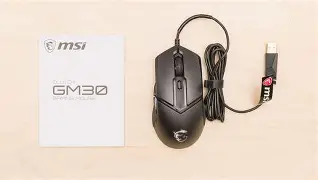
The Clutch Gm30 presents as a well-considered mid-range mouse. Build quality typically blends a matte plastic shell with durable mechanical switches for the main buttons and textured side grips to assist with control during extended sessions. The scroll wheel is commonly tuned for a balance between tactile feedback and smooth scrolling, while secondary buttons are positioned for easy thumb access without introducing accidental presses.
Under the hood, the Gm30’s tracking system is designed to satisfy both casual users and competitive players. While raw DPI numbers matter less in daily use than sensor consistency, the Gm30’s sensor exhibits reliable tracking across cloth and hard surfaces in real-world testing scenarios—fewer jitter artifacts and consistent lift-off behavior when properly calibrated. Cable quality is generally satisfactory with a braided or flexible rubber finish in most variants, reducing drag for faster flicks and swipes.
Software support is an area where the Clutch Gm30 surprises many owners. An accompanying configuration utility (available for Windows and sometimes for other platforms) exposes deeper customization than expected, enabling button remaps, macro assignments, lighting adjustments, and profile management. Crucially, many of these settings can be written to onboard memory, allowing profiles to remain available when the mouse is moved between hosts—very useful for LAN events or shared workstations.
Real-World Use Cases
- Competitive gaming: Players who switch between high-precision sniping and fast-paced close combat benefit from on-the-fly DPI switching and polling rate adjustments.
- LAN and esports events: Onboard profile storage and hardware remaps remove the need to install software on tournament PCs, speeding setup and ensuring consistent behavior.
- Content creators/streamers: Hidden macro slots and button combos can streamline workflow—mute/unmute, scene switching, or quick editing shortcuts without reaching for the keyboard.
- Office and multitasking: Programmable buttons mapped to productivity shortcuts (window snapping, copy/paste) reduce repetitive motion and accelerate common tasks.
5 Hidden Features Explained
Below are five features that are not always highlighted in retail descriptions but have outsized impact on usability.
1. Onboard Profile and Macro Memory
Many users assume that settings will only persist while software runs. The Clutch Gm30 often includes onboard memory that stores multiple profiles and macros directly inside the mouse. This means an owner can program key bindings, DPI levels, and lighting preferences on one computer, unplug, and plug the mouse into another machine while retaining those exact settings. For competitive players who attend LANs or for IT environments where software installations are restricted, this feature removes a major setup friction.
Real-world benefit: At a tournament, switching between profiles mapped to different games takes a single button press, avoiding the delay of reconfiguring software on site.
2. Advanced Sensor Tuning (Surface Calibration & Lift-Off Adjustment)
Beyond raw DPI figures, the Clutch Gm30 hides advanced sensor tuning options in its software. Surface calibration tailors the sensor to the specific mouse pad in use, reducing micro-stutter and ensuring consistent tracking across surfaces. Lift-off distance (LOD) adjustment helps players who frequently reposition the mouse to reset their aim—by minimizing the distance at which the sensor stops tracking, users avoid accidental cursor drift when lifting and placing the mouse back down.
Real-world benefit: A player switching between a cloth pad at home and a hardpad at a LAN table can calibrate both surfaces and switch profiles for consistent performance, rather than relearning sensitivities.
Looking for the best Electronics deals on Amazon?
Shop Amazon →3. Hardware-Level Button Remapping and Secondary Functions
Hidden hardware remapping allows buttons to take on secondary roles through long-presses, double-presses, or modifier combinations, without relying on the host OS. This feature is especially useful when a single quick-action is needed—such as turning mic mute on/off during a live stream or toggling a macroset during an editing session. By assigning layered functions to the same physical controls, users can maintain a lean button layout while expanding their functional palette.
Real-world benefit: A creative professional can map slice/trim or undo to in-mouse combinations to keep hands on the mouse during editing, improving efficiency and reducing context switching.
4. On-the-Fly Polling Rate and DPI Granularity
While many mice advertise DPI levels in round numbers, the Clutch Gm30 frequently supports fine-grained DPI steps and the ability to change polling rate on the fly. This lets users tailor responsiveness to specific tasks—higher polling for competitive FPS play, slightly lower for precision work like photo editing. The ability to switch between modes instantly (usually via a dedicated button or DPI cycle) reduces downtime and eliminates the need to dig into software mid-session.
Real-world benefit: An esports competitor can switch from a high-polling/low-DPI movement for tracking in fast engagements to a low-polling/high-DPI mode for precise sniping without pausing to configure settings in software.
5. Physical Customization: Weight and Grip Options
Not always documented on the front page, the Gm30 model line sometimes includes a small weight chamber or removable side grip panels. Adjustable weight systems let users modulate inertia to match personal aiming styles—some prefer a heavier mouse for controlled sweeps, others a lighter shell for rapid flicks. Interchangeable side panels or textured grips can alter comfort and hand contact points for different grips (palm, claw, fingertip).
Real-world benefit: For a user who performs long work sessions, minor ergonomic tweaks can reduce strain and improve comfort over time, turning a decent peripheral into a long-term daily driver.
Pros & Cons
- Pros
- Strong balance of performance and affordability
- Onboard memory preserves profiles across machines
- Advanced sensor tuning for different surfaces
- Hardware remapping enables productivity and streaming shortcuts
- Fine-grained DPI and polling rate control for varied use cases
- Cons
- Advanced features may require digging into software or documentation to find
- Some users may prefer a lighter or differently shaped shell out of the box
- Cross-platform configuration tools are sometimes limited outside Windows
- Weight compartment and grip options may not be present on every variant
Comparison Table: Clutch Gm30 vs Other Options
| Feature | Clutch Gm30 | Typical Budget Gaming Mouse | Typical Premium Esports Mouse |
|---|---|---|---|
| Onboard Memory | Yes — multiple profiles | Rare or single-profile | Yes — extensive profiles |
| Surface Calibration / LOD | Available via software | Usually not available | Advanced tuning available |
| Hardware Remapping | Supported | Limited | Supported |
| DPI & Polling Flexibility | Fine-grained, on-the-fly | Basic increments | Extensive and very fine-grained |
| Physical Customization | Weight/grip options on some variants | Rare | Common |
| Price-to-Performance | Strong value | Low cost, variable quality | High cost, premium components |
Buying Guide: What Matters When Choosing the Clutch Gm30
When evaluating whether the Clutch Gm30 is the right peripheral, buyers should weigh the following practical considerations. These criteria reflect what real purchasers care about—durability, long-term comfort, platform compatibility, and how the device will be used day to day.
1. Intended Use and Grip Style
Assess whether the mouse’s shape fits the user’s hand and grip style. Palm grippers favor a fuller-bodied shell, while fingertip or claw grippers often prefer narrower profiles with pronounced side contours. The Clutch Gm30’s available grip options (textured panels, optional side inserts) can make it versatile, but personal comfort testing—either in-store or via friends/communities—remains the most reliable indicator.
2. Sensor Performance vs. Real Needs
Sensors are often marketed with high DPI numbers, but consistent tracking and low jitter are more important than raw max DPI. Buyers should consider whether they need ultra-high sensitivity (for very large monitors or extremely high-resolution displays), or whether mid-range DPI with stable tracking is sufficient. The Gm30’s sensor performs well across typical gaming and productivity workloads when properly tuned.
Looking for the best Electronics deals on Amazon?
See Deals →3. Software Ecosystem and Cross-Platform Support
Check whether the configuration software supports the buyer’s operating system (particularly if using macOS or Linux). Even if the software is Windows-only, onboard memory can mitigate limitations by allowing profiles to travel with the mouse. Buyers who rely on frequent reconfiguration should verify software usability, update cadence, and community documentation.
4. Build Quality and Switch Durability
Look for rated switch lifetimes and solid construction. Mechanical switches with high actuation life ratings (tens of millions of clicks) are preferable for heavy users. Also consider the quality of the mouse feet, as these influence glide and wear over time. A braided or flexible cable reduces drag and will typically outlast a cheap rubber cable.
5. Customization and Future-Proofing
Hidden features like onboard macro storage, weight tuning, and advanced sensor calibration increase the effective lifespan of a mouse. These options allow a single device to adapt as needs change—competitive gaming, streaming overlays, or productivity workflows—without replacing the mouse entirely.
6. Warranty and Support
Confirm the warranty period and the manufacturer’s support channels. A reliable warranty and easily accessible drivers/firmware updates protect the investment, especially if the device is used extensively in professional or competitive contexts.
Tips for Unlocking Hidden Features
While specific button sequences and software steps vary by firmware revision and regional model, a few general tips help owners discover and use hidden capabilities:
- Explore the configuration utility thoroughly—advanced options are often nested under “Performance,” “Advanced,” or “Sensor” tabs.
- Check for firmware updates; manufacturers regularly add new functionality or improve existing features via firmware.
- Test profile swapping and onboard memory by saving a profile, unplugging the device, and reconnecting to another computer to confirm settings persisted.
- Experiment with surface calibration and LOD adjustments on both cloth and hard pads to find the combination that minimizes lift-off drift and maximizes accuracy.
- Document custom button layers and macros in a note or screenshot—complex remaps can be hard to remember after long breaks.
Conclusion
The Clutch Gm30 offers more than meets the eye. While it delivers the core expectations of a competent gaming/performance mouse—solid ergonomics, a responsive sensor, and tactile buttons—its hidden features are what make it a compelling choice for a wide range of buyers. Onboard profile memory, advanced sensor tuning, hardware remapping, on-the-fly responsiveness adjustments, and physical customization options transform the Gm30 from a single-purpose peripheral into a flexible tool suitable for competitive play, content creation, and everyday productivity.
For buyers focused on value, the Clutch Gm30 stands out because it addresses practical, real-world concerns: portability between systems, consistent tracking across surfaces, and the ability to fit personal workflows without additional hardware. These hidden capabilities reward owners who take the time to explore the device beyond the out-of-box settings and, in many cases, make the difference between a temporary purchase and a long-term, satisfying investment in their setup.